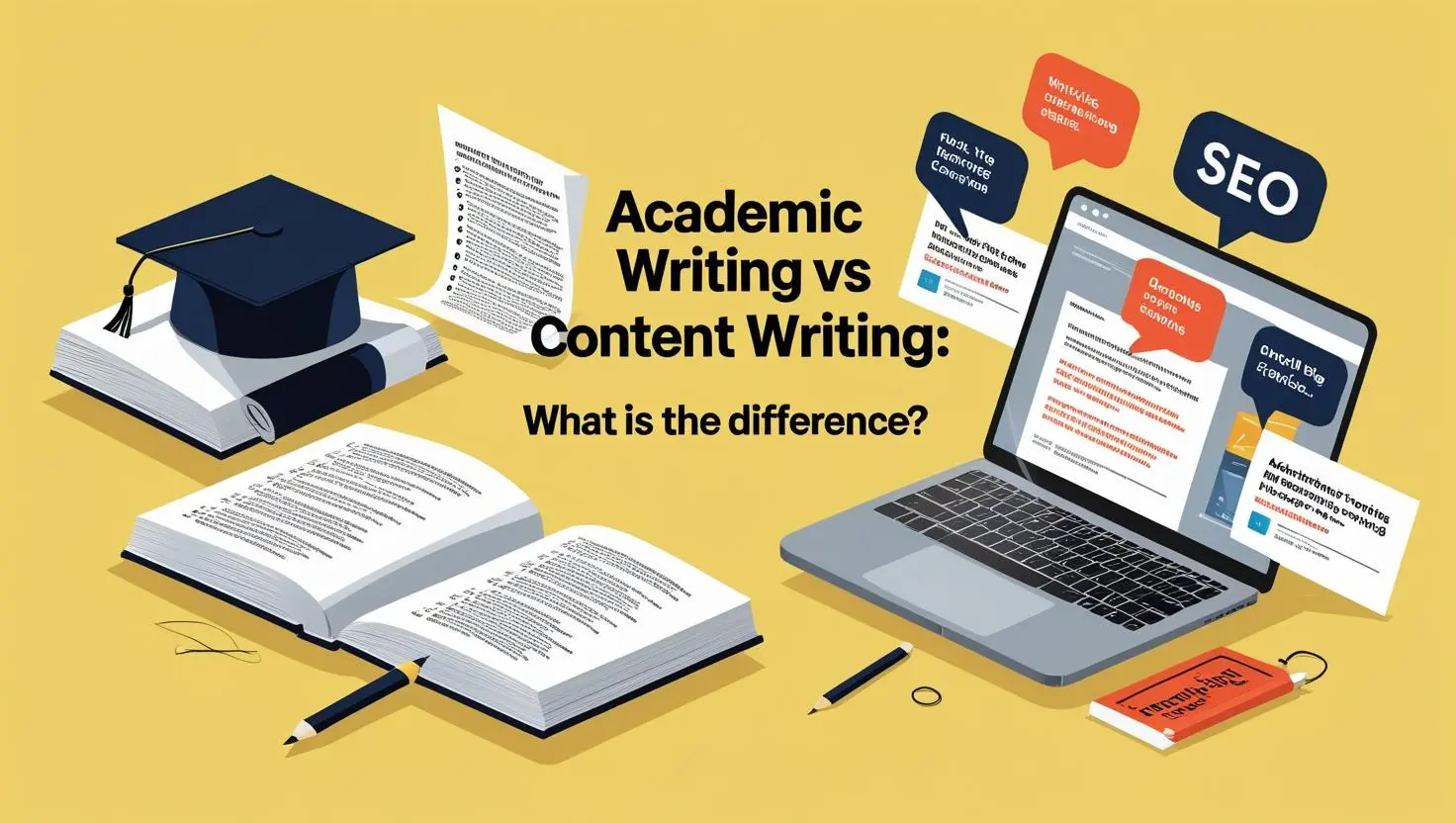
In today's information-driven world, writing plays a critical role in communication across industries, academia, and digital media. However, not all writing is the same. Two of the most commonly compared forms are academic writing and content writing.
These styles serve vastly different purposes, target different audiences, and demand distinct skill sets. If you're wondering about Academic Writing vs Content Writing, understanding the nuances between the two can help you choose the right path for your goals—whether you're a student, a freelance writer, or a professional communicator.
What is Academic Writing?
Academic writing is a formal and evidence-based style of writing that is typically used in educational settings such as universities, colleges, and research institutions. Its primary goal is to inform, argue, or explore complex ideas based on scholarly sources and critical thinking.
Characteristics of Academic Writing
- Formal Tone and Language
Academic writing avoids colloquialisms, slang, and overly casual expressions. It maintains a serious, objective tone throughout the text. - Structured Format
Academic texts follow a strict structure: introduction, thesis statement, body paragraphs with topic sentences, and a conclusion. In the case of research papers, sections like literature review, methodology, results, and discussion are also included. - Evidence-Based
Every claim must be supported with credible evidence, often from peer-reviewed journals, books, or primary research. - Referencing and Citations
Proper citation using formats like APA, MLA, Chicago, or Harvard is essential. This lends credibility and avoids plagiarism. - Complexity and Depth
Academic writing often deals with abstract, theoretical, or discipline-specific topics, requiring advanced vocabulary and conceptual thinking.
Examples of Academic Writing
- Research papers
- Thesis and dissertations
- Case studies
- Critical essays
- Journal articles
- Conference papers
Audience for Academic Writing
The typical audience includes professors, researchers, students, and other members of academic or scholarly communities.
What is Content Writing?
Content writing refers to the creation of text for digital platforms, with the primary goal of attracting, engaging, and converting online readers. It is used extensively in digital marketing, branding, and communication strategies.
Characteristics of Content Writing
- Conversational and Engaging Tone
Content writing uses a friendly, relatable, and clear tone to keep the reader engaged. It can be persuasive, informative, or entertaining. - Search Engine Optimization (SEO)
A critical feature of content writing is the integration of keywords to improve a web page’s ranking on search engines like Google. - Flexible and Scannable Format
Content is often broken into short paragraphs, bullet points, and subheadings to make it easy to skim and digest. - Call-to-Action (CTA)
Whether it’s buying a product, subscribing to a newsletter, or sharing a post, content writing usually ends with a CTA to encourage reader interaction. - Visuals and Multimedia Integration
In content writing, visuals like images, infographics, and videos often accompany the text to enhance user experience.
Examples of Content Writing
- Blog posts
- Product descriptions
- Website copy
- Email newsletters
- Social media posts
- Video scripts
- Whitepapers (sometimes)
Audience for Content Writing
The audience is much broader, including general consumers, niche audiences, potential clients, or anyone browsing the internet.
Academic Writing vs Content Writing: Key Differences
Let’s now delve deeper into the real distinctions between Academic Writing vs Content Writing, by comparing them across various dimensions:
| Feature | Academic Writing | Content Writing |
|---|---|---|
| Tone | Formal, Objective | Conversational, Relatable |
| Purpose | Inform, argue, contribute to scholarship | Engage, convert, educate, entertain |
| Audience | Academics, researchers, students | General public, customers, online users |
| Structure | Rigid (Intro, Body, Conclusion, Citations) | Flexible (headings, bullets, CTA) |
| Style | Complex and technical | Simple, clear, sometimes persuasive |
| Citation | Mandatory and detailed | Rarely used unless quoting sources |
| Platform | Academic journals, libraries, databases | Blogs, websites, social media, e-commerce |
| Length | Often long and in-depth | Varies widely depending on the platform |
| Feedback | Peer-reviewed, instructor-graded | User engagement, analytics-driven |
Skills Required for Academic Writing
- Critical Thinking
You must analyze, interpret, and synthesize information from various scholarly sources. - Research Proficiency
Academic writers need to navigate academic databases and understand how to evaluate source credibility. - Analytical Skills
You must be able to draw logical conclusions, form hypotheses, and build coherent arguments. - Knowledge of Style Guides
Familiarity with citation styles like APA, MLA, or Chicago is essential. - Grammar and Precision
Language should be grammatically accurate and terminology should be used correctly.
Skills Required for Content Writing
- SEO Knowledge
Knowing how to use keywords effectively without keyword stuffing is key. - Digital Literacy
Content writers often use CMS platforms like WordPress and tools like Google Analytics, Grammarly, and Canva. - Marketing Understanding
Understanding user behavior, conversion rates, and buyer personas can enhance content quality. - Creativity and Storytelling
The ability to make content interesting and memorable is crucial. - Adaptability
Content writers often have to shift tones quickly depending on the platform or brand.
Career Opportunities: Academic Writing vs Content Writing
Both fields offer promising career paths, but they cater to different interests and goals.
Academic Writing Careers
- Research assistant
- University professor
- Journal editor
- Curriculum developer
- Grant writer
Academic writing roles often require advanced degrees (Master’s or PhD) and are generally part of academic institutions or government organizations.
Content Writing Careers
- Freelance content writer
- Copywriter
- SEO specialist
- Content marketer
- Technical writer
- Scriptwriter
Content writers are in demand across industries such as e-commerce, healthcare, finance, and technology. A degree helps, but a strong portfolio and SEO knowledge are often more valuable.
Common Misconceptions About Academic and Content Writing
1. All writing is the same
Not true. Academic Writing vs Content Writing involves different objectives, audiences, and delivery methods.
2. Content writing is easier
While content writing may look simple, it requires strategic thinking, especially when balancing creativity with SEO.
3. Academic writing has no real-world use
In fact, academic writing contributes significantly to research, innovation, and policy development.
Which One Should You Choose?
Choosing between academic writing vs content writing depends on your personal interests, career goals, and writing strengths.
- If you enjoy structured research, formal arguments, and contributing to knowledge in a field, academic writing is for you.
- If you prefer writing for a wide audience, crafting persuasive content, and keeping up with digital trends, then content writing is a better fit.
Some professionals even do both academic writing during the academic year and freelance content writing for income or creativity.
Conclusion
The difference between Academic Writing vs Content Writing goes far beyond grammar and vocabulary. These two writing styles serve different purposes, use different techniques, and appeal to different audiences. Academic writing is about precision, depth, and evidence. Content writing, on the other hand, is about engagement readability and conversion.
Also Read- The Peer-Review Process Demystified: A Researcher’s Guide
